The Kind of Fuel Motherhood Requires (and It’s Not in Your Pantry)

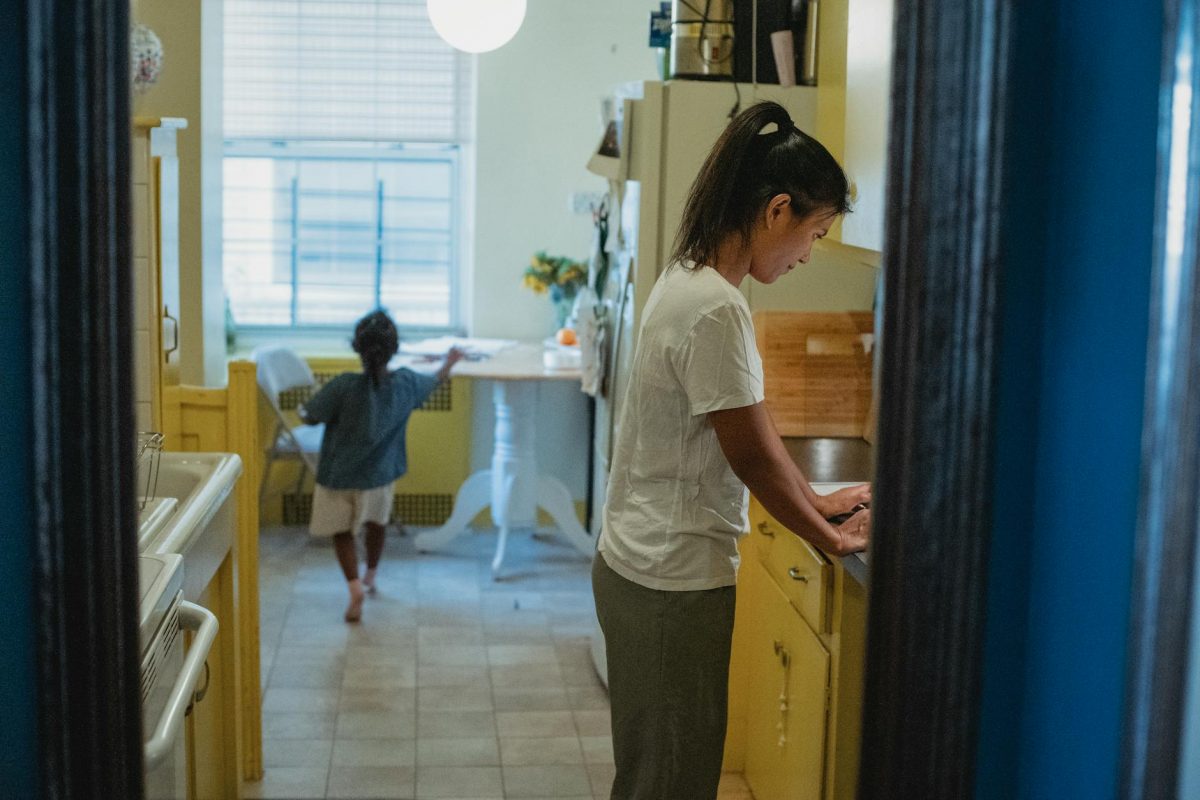
“Mom, I’m hungry.”
Five minutes later: “Can I have a snack?”
Ten minutes later: “I’m still hungry.”

If you’re in this stage of motherhood, you know the rhythm. The constant asking. The never-quite-full feeling. The snacks that somehow don’t stick. But if we’re honest… it’s not just our kids. Somewhere between the laundry piles, the noise, the constant touching, and the mental load that never turns off, there’s this quiet hum inside of us too:

I need something.
I just don’t know what it is.

So we reach. We reach for our phones. We reach for a moment of quiet. We reach for sugar, caffeine, a quick scroll, a little escape. And just like our kids with their snacks… it helps for a minute.

But it doesn’t last.

Why do I feel like I need something all the time?

Hunger isn’t the issue—it’s actually the signal. Our kids aren’t wrong for asking. Their little bodies are growing, burning energy, needing real fuel. And in the same way, that restless, worn-down, slightly-on-edge feeling in us isn’t something to ignore or push down. It’s not failure or weakness. It’s a signal that we’re running on empty in a way snacks, scrolling, or a quiet room can’t fix.

Scripture actually speaks to this kind of hunger in a deeper way than we often realize. “As the deer pants for streams of water, so my soul pants for you, my God” (Psalm 42:1). That ache we feel isn’t random—it’s pointing us back to the Lord who can refuel us to be whole, the way the world can’t.

What kind of fuel actually fills me?

Jesus said, “I am the bread of life. Whoever comes to me will never go hungry, and whoever believes in me will never be thirsty” (John 6:35).

Not rarely hungry. Not less hungry. Never.

That doesn’t mean we suddenly become women who never feel tired or overwhelmed. Motherhood still asks a lot of us. But it does mean there is a kind of filling that goes deeper than physical rest or momentary relief. Isaiah 55:2 puts it this way: “Why spend money on what is not bread, and your labor on what does not satisfy?” If we’re honest, we do this all the time. We pour our energy into things that were never meant to fill us, and then wonder why we still feel empty.

The kind of fuel God offers is different. It steadies you instead of just distracting you. It meets you right in the middle of the chaos—not after it’s cleaned up.

Why do I keep reaching for things that don’t last?

Because they’re familiar, and familiar feels safe when everything else feels demanding. Because of our flesh we don’t always reach for what’s best—we reach for what’s easy, what’s quick, what we know will give us something right now. Even if it’s small or fades fast.

So we go back to the same things, over and over.

We pick up our phone without thinking, not because it actually rests us, but because it distracts us just enough to get through the moment. We grab something to eat, not out of real hunger, but because it feels like a break. We fill the silence with noise, the overwhelm with scrolling, the exhaustion with anything that doesn’t ask more of us.

And none of those things are wrong in themselves. But they were never meant to sustain us. They’re quick fixes and temporary relief. But temporary relief has a way of keeping us stuck in the same cycle—still tired, still on edge, still feeling like something’s missing. And motherhood makes this even harder, because slow, intentional filling doesn’t always feel accessible. When your day is constantly interrupted, when someone always needs you, when quiet is rare, of course you’re going to reach for what’s fast.

But quick doesn’t mean sustaining. And deep down, we know the difference.

Am I failing, or just running on empty?

If you’ve been feeling off, irritable, stretched thin, or like nothing quite satisfies… it’s not because you need to try harder. It might just be that you’re hungry for something real.

And Scripture meets us here too, not with pressure, but with invitation. “He satisfies the thirsty and fills the hungry with good things” (Psalm 107:9). Not the ones who have it all together—the ones who come empty.

Even Jesus Himself stepped away to be filled. In the middle of constant need, crowds, and demands, He withdrew to quiet places to be with the Father (Luke 5:16). Not because He was failing—but because He was showing us what it looks like to stay filled.

So if you feel like you’re running on empty, it’s not a sign that you’re doing motherhood wrong. It might be a sign that you’re trying to pour from a place that hasn’t been filled yet. And the good news is, you don’t have to figure it all out or fix yourself first. Jesus already made the invitation simple: come.

What does this actually look like in real life?

This isn’t about adding another long quiet time to your already full day. It’s about small, real moments of turning toward the only thing that actually fills you- your relationship with Jesus.

It might be whispering a prayer while you clean up the same mess for the third time, or sitting in the car for one extra minute to finish worshipping before going inside. It might look like repeating a single verse when you feel yourself unraveling, or choosing worship music over noise, even if it’s just in the background.

God isn’t waiting for a perfect, uninterrupted hour. He meets you in the small, surrendered moments. “Come to me, all you who are weary and burdened, and I will give you rest” (Matthew 11:28). Not when everything is done—right in the middle of it!

The next time you feel that pull—that urge to reach for something quick—pause for just a second and ask: What kind of fuel do I actually need right now?

Not the fastest answer. Not the easiest one. The real one. Because the kind of fuel your soul is craving isn’t in your pantry. “Blessed are those who hunger and thirst for righteousness, for they will be filled” (Matthew 5:6). And that promise? It still holds, even on the days that feel long, loud, and far from full.

Maybe the question you started with was, Why do I feel like I need something all the time? And the answer isn’t that you’re too much, or failing, or doing motherhood wrong. It’s that you were never meant to run on empty.

You were created with a need that points somewhere real. A kind of hunger that isn’t solved by doing more, fixing more, or finally getting everything under control. It’s solved by being filled. Not rushed, perfectly, or all at once. But again and again, in small, quiet, real moments where you turn back to the One who actually satisfies.


Scriptures to Battle Comparison in Motherhood and Find Joy Again

Comparison in motherhood rarely begins as a deliberate choice. It often develops gradually through observation, especially in environments where other families, routines, or parenting styles are visible. Over time, this comparison can influence how you evaluate your own efforts.

What begins as simple awareness can turn into discouragement if it leads to the belief that you are not measuring up. This shift is subtle but significant, because it changes your focus from your own responsibilities to someone else’s.

Galatians 6:4–5 instructs believers to examine their own work rather than comparing themselves to others. “But let every man prove his own work, and then shall he have rejoicing in himself alone, and not in another. For every man shall bear his own burden.” This passage emphasizes personal responsibility and discourages the habit of measuring yourself against someone else’s situation.

For mothers, this means that your role is to be faithful with what God has given you, not to replicate what someone else is doing. Each family has different needs, circumstances, and dynamics.

Your Design and Role Are Intentional

Psalm 139 emphasizes that each person is intentionally created, loved and known by God. “O Lord, you have searched me and known me! You know when I sit down and when I rise up; you discern my thoughts from afar.” This includes your personality, your strengths, and your specific role as a mother. When you compare yourself to someone else, you are evaluating your life against a design that was not meant for you.

Understanding that your role is intentional helps reduce the influence of comparison. You are not expected to be someone else. You are called to be faithful in your own assignment.

Contentment Is Developed Through Trust

Philippians 4:11–12 is one of my favorite bible verses. It shows that contentment is something learned over time. “I am not saying this because I am in need, for I have learned to be content whatever the circumstances. I know what it is to be in need, and I know what it is to have plenty. I have learned the secret of being content in any and every situation, whether well fed or hungry, whether living in plenty or in want.” Contentment is not dependent on circumstances being ideal. Instead, it develops through reliance on God, fully and completely.

When you trust that God has placed you where you are for a purpose, it becomes easier to focus on your own responsibilities without constantly evaluating yourself against others.

When you measure your life against others, you start chasing outcomes that may not even align with your purpose. That constant comparison can quietly erode gratitude, making what you already have feel insufficient. By centering your attention on what you’ve been given to steward, you create space for peace and clarity to grow. Trusting God’s design doesn’t mean you stop striving—it means your effort is grounded in purpose instead of pressure. In that place, joy is no longer dependent on how you rank, but on how faithfully you live out what’s yours.

Palm Sunday for Moms: What It Means to Praise God Even When Life Feels Unfinished

I know I can’t be the only mom scrambling to get ready to celebrate the most important day in history, Easter Sunday. Between planning dinners, church gatherings, activities for the kids, and keeping up on daily routines it’s easy to forget what Easter is really about – the sacrifice of our Lord and salvation in Jesus’ name! As Palm Sunday approaches, we need to slow down to remember what this season is truly all about and how it applies to our everyday lives as Mom.

Palm Sunday marks the beginning of Holy Week and commemorates Jesus’ entry into Jerusalem. In Matthew 21:8–9, crowds gathered to welcome Him, laying down palm branches and crying out, “Hosanna to the Son of David!” It was a moment filled with celebration, recognition, and visible excitement. From the outside, it appears to be a scene of certainty and joy. The people believed they understood who Jesus was and what He had come to do. They praised Him openly and confidently. However, what makes Palm Sunday especially meaningful is what follows. Within days, many of those same voices would change. The expectations placed on Jesus did not unfold in the way people anticipated, and their praise did not remain consistent.

For mothers, this pattern can feel familiar. It is often easier to feel joyful and confident when life seems to be going well or when outcomes match expectations. But when days feel repetitive, unfinished, or uncertain, praise can become more difficult. Palm Sunday invites a deeper understanding of what it means to praise God, not only in moments of clarity, but also in the middle of ongoing, unresolved seasons.

The Crowds Praised Based on Expectation, Not Full Understanding

The people who welcomed Jesus into Jerusalem were not wrong to praise Him, but their understanding was incomplete. Many expected a political deliverer, someone who would immediately change their circumstances. When those expectations were not met, their response shifted. This highlights an important truth about praise. It is often influenced by what we believe God is going to do. When our expectations are clear and hopeful, praise feels natural. When outcomes are uncertain or delayed, praise can feel more difficult to sustain.

In motherhood, expectations can shape your perspective in similar ways. You may expect certain rhythms, behaviors, or results, and when those expectations are not met, it can lead to frustration or discouragement – even anger and sorrow. The tension between what you hoped for and what is actually happening can make it harder to maintain a steady sense of gratitude. Palm Sunday reminds us that praise rooted only in expectation is fragile. True, lasting praise must be rooted in who God is, not only in what we think He will do.

Jesus Was Worthy of Praise Even When His Path Was Not Understood

Although the crowds did not fully understand what Jesus was about to do, He was still worthy of praise. His mission was not less valuable because it did not align with their expectations. In fact, it was far greater than they realized.

This truth applies directly to how you view your own life and responsibilities. There are many aspects of motherhood that may not look the way you expected. Days may feel unfinished, progress may feel slow, and outcomes may not be immediately visible. Still, God’s work in your life is not dependent on your full understanding. Just as Jesus was fulfilling His purpose even when it was not recognized, God is working in ways that may not always be clear in the moment. Praising God in this context requires trust. It means acknowledging that His work is still good, even when it is not fully visible.

Faithful Motherhood Often Feels Unfinished

One of the challenges of motherhood is that it rarely feels complete. There is always more to do, more to teach, and more to manage. Even at the end of a productive day, there are often tasks left undone or situations that still need attention. This ongoing sense of incompleteness can make it difficult to feel satisfied or at rest. It can also affect how you approach God. When everything feels unfinished, it is easy to believe that you need to do more before you can feel peaceful or grateful.

Palm Sunday offers a different perspective. The people praised Jesus before the work of the cross was completed. At that point, the most significant events had not yet taken place, yet praise was still expressed.

For mothers, this is a meaningful reminder that praise does not require completion. You do not need to wait until everything is done or everything is going well in order to acknowledge God’s goodness.

Praise as a Choice, Not Just a Reaction

Psalm 34:1 says,

“I will bless the Lord at all times; his praise shall continually be in my mouth.”

This verse emphasizes that praise is not only a reaction to favorable circumstances, but a consistent choice.

In motherhood, this choice becomes especially important. There will be days when circumstances naturally lead to gratitude, but there will also be days when praise requires intention. Choosing to focus on what is true about God, rather than what feels unresolved, helps anchor your perspective. This does not mean ignoring challenges or pretending that everything is easy. Instead, it means recognizing that God’s character remains constant, regardless of your current situation.

What Palm Sunday Means for You, Mom

Palm Sunday is not only a historical event. It provides a framework for understanding how to approach God in the middle of real life. It shows that praise is not reserved for moments of clarity or completion, but is appropriate even in seasons of uncertainty.

As a mother, you may not always see the full impact of what you are doing. You may not always feel confident in how things are unfolding. However, just as Jesus was worthy of praise before the cross, God is worthy of praise in your current season. You are allowed to praise Him in the middle of unfinished days, ongoing responsibilities, and imperfect circumstances because His grace is enough.

Palm Sunday reminds us that praise is not dependent on having everything figured out. It is rooted in the truth of who God is. For mothers, this means that even when life feels incomplete or uncertain, there is still reason to trust and to acknowledge God’s goodness. Your days may feel unfinished, but God’s work is not. He is present, active, and worthy of praise right where you are.

Creating Unity in the Household: A Christ-Centered Guide for Moms

Unity in the home doesn’t happen by accident. It’s cultivated—slowly, prayerfully, and often in the middle of real-life messes. The laundry piles, the sibling squabbles, the quiet resentment that can creep in when no one seems to notice how much you carry. If you’ve ever longed for more peace, more togetherness, or simply less tension under your roof, you’re not alone.

As Christian moms, we’re called to be builders of our homes—not in perfection, but in purpose. Unity isn’t about everyone agreeing all the time. It’s about anchoring our families to the same foundation: Christ.

Start With Your Heart

Before unity can take root in the household, it has to begin in our own hearts. That doesn’t mean you have to feel calm or patient all the time—it means being willing to bring your frustrations, fears, and fatigue to the Lord instead of letting them spill out sideways onto your family.

Scripture reminds us: “Above all else, guard your heart, for everything you do flows from it.” (Proverbs 4:23)

When we pause to pray before reacting, when we choose grace over control, we create space for peace to grow. Unity often starts with a softened response instead of a sharp word.

Establish a Shared Vision for Your Home

Kindness, respect, faithfulness, and hospitality are not just nice ideas—they are biblical principles meant to be lived out daily within the walls of our homes. Scripture calls us to clothe ourselves with compassion and humility, to love faithfully, and to welcome others with open hearts. These values should consistently guide how we speak, correct, forgive, and serve one another.

For unity to flourish, everyone in the household needs to understand why these values matter. And that understanding doesn’t come from rules alone—it comes from knowing God’s Word and watching it be lived out in real time. When our families see Scripture shaping our choices, priorities, and responses, those values become part of the home’s foundation rather than just expectations.

How to Model This in Everyday Life

Modeling biblical values doesn’t require perfection; it requires intentionality and consistency.

  • Kindness: Speak gently, especially when tensions are high. Let your children hear you choose grace-filled words when you’re frustrated.
  • Respect: Honor your spouse and children with your tone and attention. Avoid sarcasm or dismissive language, even during correction.
  • Faithfulness: Be steady and dependable. Keep your word, follow through, and show up—especially on hard days.
  • Hospitality: Create a home where people feel welcomed, seen, and safe. Hospitality begins with how we treat one another before it ever extends to guests.

When these principles are taught through Scripture and modeled through daily life, unity grows naturally. Over time, they shape the culture of your home and point everyone back to Christ.

Use Prayer and Praise as Spiritual Anchors

Prayer and praise are some of the most powerful tools God gives us to cultivate unity in the home. They don’t require long, eloquent words or perfectly planned moments—just willing hearts that invite Him into everyday rhythms.

Praying together at meal times, throughout the day and before bed creates natural anchors in the day. These moments gently remind our children that we rely on God not only in crisis, but in gratitude, rest, and routine. Over time, prayer becomes less of an event and more of a reflex.

One of the most impactful practices is allowing your children to lead in prayer. Their prayers may be simple, repetitive, or even a little scattered—and that’s exactly what makes them powerful. When children are given space to pray out loud, they learn that God is approachable, that their voices matter, and that faith is something they actively participate in, not just observe.

This also means pausing to pray during chaotic moments—before a hard conversation, in the middle of sibling conflict, or when emotions are running high. Inviting God into these moments shifts the focus from control to trust and reminds everyone in the household where true peace comes from.

Worship works the same way. When you worship fully and sincerely in front of your family—whether through music, song, or quiet praise—you model what it looks like to love God with your whole heart. This kind of worship gives your children permission to express their own faith freely, without fear of doing it “wrong.”

A home where prayer is practiced openly and worship is expressed authentically becomes a place of spiritual safety. Unity deepens when every member of the household knows they are free to seek God, praise Him, and encounter His presence—together.

When God is invited into these daily moments, He shapes not only individual hearts, but the atmosphere of the entire home.

Practice Gentle, Clear Leadership

Gentle, clear leadership is one of the most vital—and often misunderstood—ways unity is built in the home. Scripture speaks clearly about God’s design for household structure, not as a system of control, but as one of order, protection, and love.

The Bible calls husbands to loving, sacrificial leadership (Ephesians 5:25), and it also affirms the powerful role of wives and mothers in strengthening the home.

“She watches over the affairs of her household and does not eat the bread of idleness.” Proverbs 31:27

This kind of watchfulness is not passive—it is intentional, discerning, and deeply influential.

You may have heard the analogy before that as wives and mothers, we often function like the legs that hold up the table. If the tabletop represents the overall leadership and direction of the home, the legs provide the stability that allows everything else to stand. Our presence, consistency, and boundaries create the structure that supports our husbands and establishes safety for our children.

Biblical leadership within the home does not mean harshness or domination. It means setting clear expectations rooted in God’s Word, maintaining rhythms that point the family toward Christ, and protecting the emotional and spiritual atmosphere of the household. Boundaries are not barriers—they are expressions of care.

For our children especially, clear boundaries communicate safety. When we consistently correct with love, guide with patience, and remain steady even when emotions run high, we show them what trustworthy leadership looks like. This steadiness fosters unity because everyone knows what is expected and where security is found.

There will be moments when correction is necessary and moments when grace must lead the way. When mistakes happen—and they will—let restoration be louder than disappointment. Unity grows when leadership reflects both truth and mercy, just as Christ leads us.

Make Room for Grace—Every Single Day

God’s grace is so good—and it is meant to be lived out daily within our homes. We have been freely given grace through Christ, not because we earned it, but because of His great love for us. When we truly grasp that, it changes how we respond to one another.

In family life, grace looks like choosing love over keeping score. It means extending patience when emotions run high, offering forgiveness when mistakes are made, and responding with mercy instead of frustration. Grace does not ignore sin or dismiss correction—it covers correction in love.

As mothers, we have countless opportunities each day to model what grace looks like in action. When we extend grace to our children, we teach them about God’s heart. When we extend grace to our spouse, we strengthen unity. And when we extend grace to ourselves, we acknowledge that growth is a process, not a performance.

Grace is the glue that holds a household together. When grace is practiced consistently, love deepens, trust grows, and unity is able to flourish—even on the hardest days. When your children see you extend grace—to them, to your spouse, and to yourself—they learn how to live it out too.

Unity in the household is not a destination you arrive at—it’s a rhythm you return to. There will be seasons of closeness and seasons of strain, but God is faithful in all of them.

Keep sowing peace. Keep choosing love. Keep inviting Christ into the center of your home.

“How good and pleasant it is when God’s people live together in unity.” Psalm 133:1

How to Handle Pregnancy “Mom Rage”: Managing the Meltdown with Grace

Pregnancy is beautiful — but it’s also hard. Between hormone shifts, exhaustion, and the emotional weight of preparing for a new life, many moms experience moments of anger, frustration, or even what some call “mom rage.” If you’ve felt it, you’re not alone — and it doesn’t make you a bad mom.

Here’s how to manage the meltdowns with grace, faith, and self-compassion.

Pause and Breathe

Sometimes the anger or frustration just hits, and it feels like there’s no way to stop it. One thing that’s helped me — and I mean really helped — is simply pausing and taking a breath. Not just any breath, but a moment to really breathe in God’s presence.

God breathed life into us (Genesis 2:7), and every breath we take is a gift from Him. When I feel my emotions rising, I try to remember that. I’ll close my eyes for a few seconds, take a slow, deep breath in, and feel the tension leave as I exhale. Sometimes I’ll do it a few times in a row, and it’s like God whispers, “I’ve got this.”

Psalm 46:10 says, “Be still and know that I am God.” That verse has become my anchor. Even when my body is frazzled and my mind is racing, taking a breath and remembering Him helps me step back before I say or do something I’ll regret.

It doesn’t fix everything instantly, and sometimes the meltdown is still coming — but it gives you a tiny pause. A tiny moment to remember that you’re not alone, and that He’s carrying the weight with you. That little pause can make all the difference.

Set Gentle Boundaries: Protecting Your Peace

Here’s the thing — pregnancy (and motherhood in general) can stretch you so thin that it feels like the world is pulling at every corner of your life. And when your patience is already low, it’s easy to let things slide… until you explode. That’s why learning to set gentle boundaries is so important.

Setting boundaries doesn’t make you unkind, selfish, or harsh. It simply means you’re protecting the space you need to stay grounded — emotionally, mentally, and spiritually. God calls us to live with wisdom, and part of that is recognizing when to say, “I can’t do this right now” or “I need a moment.”

Jesus Himself often stepped away from crowds to pray and recharge (Mark 1:35). If He needed space to align with the Father, we certainly aren’t failing Him by doing the same. Boundaries can look small — asking for help with dinner, stepping out of a tense situation, or even taking a quiet moment in your bedroom — but they give you room to breathe and rely on God rather than your own strength.

As you practice this, remember Proverbs 4:23: “Above all else, guard your heart, for everything you do flows from it.” Protecting your heart and your peace is not pride — it’s wisdom. You can still love generously and serve faithfully, but you don’t have to pour from an empty cup.

It’s okay to pause, it’s okay to step back, and it’s okay to ask for support. In doing so, you’re modeling healthy boundaries for your children and creating space for God’s peace to flow into your life — even in the chaos of pregnancy and motherhood.

Pray and Praise: Using the Weapons God Gave You

When emotions are high and patience feels gone, prayer and praise can feel like the last thing you have energy for — but they’re actually some of the strongest tools God has placed in our hands. Not fancy prayers. Not perfect words. Just honest, real conversations with Him.

Sometimes prayer in pregnancy looks like whispering, “Lord, I need You right now.” Other times it’s sitting in silence because you don’t even know what to say. Both count. God isn’t measuring your words — He’s meeting your heart. Scripture reminds us that “The Lord is near to all who call on Him” (Psalm 145:18). You don’t have to clean yourself up before coming to Him.

Praise works a little differently, but it’s just as powerful. Praise shifts your focus when everything in you wants to fixate on what’s going wrong. It doesn’t ignore the hard stuff — it just reminds your soul who’s bigger. Even a quiet, “God, You are good, even here,” can break through the heaviness of a moment.

The Bible tells us that our battles aren’t just physical or emotional — they’re spiritual too. “For the weapons of our warfare are not of the world, but have divine power” (2 Corinthians 10:4). Prayer and praise aren’t passive responses; they’re active weapons God gives us to fight fear, anger, overwhelm, and discouragement.

There’s something powerful about choosing to pray or praise in the middle of a meltdown. It invites God into the moment and reminds us that we don’t have to fight motherhood — or pregnancy — on our own strength. And even when nothing around you changes right away, something inside you often does.

Self-Compassion: Give Yourself Grace

If you take nothing else from this, hear this part clearly: you are not failing because you’re struggling. Pregnancy can intensify emotions in ways that feel unfamiliar and uncomfortable, and that doesn’t mean something is wrong with you or your faith. It means you’re human — and carrying a lot.

Self-compassion in this season looks like speaking to yourself the way you would speak to a dear friend. You wouldn’t shame her for having a hard day or feeling overwhelmed. You’d remind her that she’s tired, growing a life, and doing the best she can. You deserve that same kindness.

God isn’t standing over you disappointed when you lose your patience or have a meltdown. He’s near, gentle, and full of mercy. “The Lord is compassionate and gracious, slow to anger and abounding in love” (Psalm 103:8). If that’s how He treats us, we can learn to extend that same grace to ourselves.

Some days, self-compassion means apologizing and moving forward instead of replaying the moment over and over. Other days, it means resting, crying, or admitting you need help. None of that disqualifies you as a good mom or a faithful woman — it simply means you’re learning to rely on God instead of perfection.

God never asked you to white-knuckle your way through this season; He invites you to lean on Him, moment by moment. So when mom rage starts rising, don’t underestimate the power of turning to God. Whisper His name. If you’re in the middle of a meltdown right now, take a breath. God is with you here. You are deeply loved, richly supported, and never walking this road alone. Every one of our days is covered by His faithfulness.