
When Parenting Feels Like a War Zone: Finding Unity, Patience, and Peace in Christ

There are seasons in motherhood that feel less like a peaceful home and more like a battlefield. Everyone is exhausted. You and your spouse feel like you’re on completely different pages. One of you leans toward firm discipline, quick correction, and structure. The other leads with emotional connection, gentleness, and understanding. Neither approach is wrong in itself, but when they aren’t aligned, tension builds quickly. What could complement each other instead begins to clash, and before long, it feels like everything is unraveling.

The kids sense it. You feel it. Your home, the very place meant to be a refuge, starts to feel like a place where everyone is bracing for the next moment—where patience runs thin, voices rise quicker than we intend, and even the smallest things feel overwhelming. And in the middle of it all, mom often carries the heaviest weight, trying to hold everything together emotionally while silently running on empty.

In these moments, it becomes clear that something deeper is going on than just miscommunication or exhaustion. At the root, we are often relying far too much on ourselves. We are leaning on our own understanding, our own methods, our own expectations of how things should be going. But Scripture gently reminds us, “Trust in the Lord with all your heart and lean not on your own understanding; in all your ways submit to Him, and He will make your paths straight” (Proverbs 3:5–6). When we step outside of that dependence, even with the best intentions, we find ourselves striving, controlling, and ultimately burning out.

There’s also another quiet struggle that creeps in—expectations. We carry this unspoken idea of how our children should behave, how quickly they should listen, how respectfully they should respond, and how smoothly our home should run. Sometimes those expectations are shaped by comparison, sometimes by our own upbringing, and sometimes by sheer survival—we just want to make it through the day without conflict. But when those expectations are unrealistic or disconnected from where our children actually are, frustration grows on both sides.

The truth is, patience is not something we can manufacture in our own strength. It is, as Galatians reminds us, a fruit of the Spirit (Galatians 5:22–23). And fruit doesn’t grow through pressure—it grows through abiding. When we are disconnected from the Spirit, we will feel impatient, reactive, and overwhelmed. But when we are rooted in Him, even imperfectly, He begins to produce something in us that we simply cannot force on our own.

That shift changes how we see our children. Instead of viewing their behavior as something to control or fix immediately, we begin to see opportunities for discipleship. Raising godly children is not about managing behavior alone; it is about consistently pointing them back to who God is and how He calls us to live. Even in the smallest moments—redirecting a harsh word, guiding them through obedience, or walking them through repentance—we are shaping their understanding of the Lord.

And this is where grace has to enter the picture, not just for our children, but for ourselves and our marriages. You and your spouse are not enemies—you are partners who are both tired, both trying, and both in need of the same guidance from the Lord. Instead of pushing harder against each other, there is an invitation to pause, to pray together, and to seek unity not in method, but in mission. God is not asking for perfect parenting strategies; He is asking for surrendered hearts.

Sometimes, the most spiritual thing you can do in a hard season is simply to stop. To step away for a moment. To take a breath. To pray, even if it’s short and scattered. To admit, “Lord, I cannot do this in my own strength today.” There is no shame in needing rest. In fact, rest is often where God gently meets us again. Whether it looks like a few quiet minutes alone, intentional time with your spouse, or even allowing your children space to play and reset, these pauses are not failures—they are necessary rhythms of grace.

What’s beautiful is that in the middle of all our inconsistency, God remains completely steady. When our emotions fluctuate, when we overreact, when we feel like we’re failing again and again, He does not respond by withdrawing or escalating. He does not love us less on our worst days. He does not grow impatient with our weakness. He is constant—gracious, merciful, and present.

“The Lord is compassionate and gracious, slow to anger, abounding in love” (Psalms 103:8).

And that is the model we are invited to reflect in our homes. Not perfectly, but faithfully.

So if your home feels tense, if your patience feels thin, if you and your spouse feel out of sync, take heart. This does not mean you are failing—it means you are human and in need of the same grace you are trying to give your children. God has not stepped away from your home. He is still working, still leading, still present in the middle of the noise and the mess.

You are not alone in this. You are not behind. And you are not expected to hold it all together on your own.

Even here—especially here—God is faithfully at work.
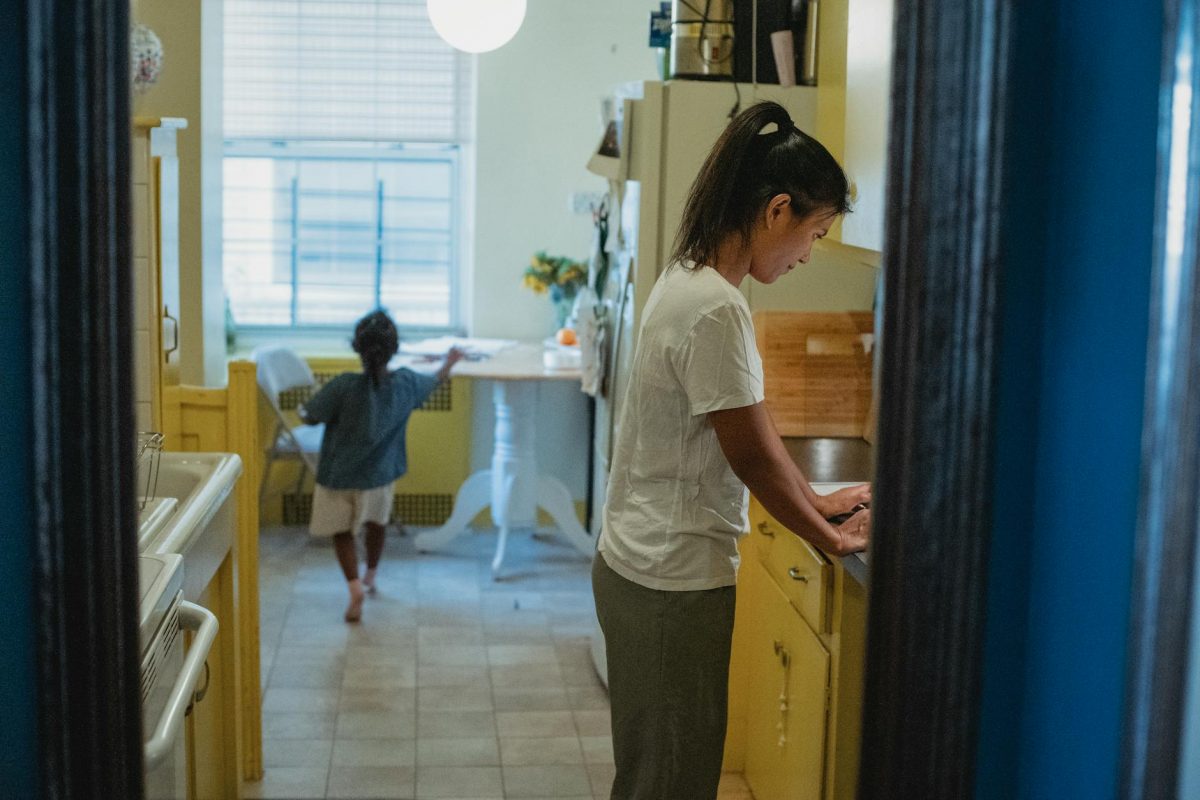
The Kind of Fuel Motherhood Requires (and It’s Not in Your Pantry)

“Mom, I’m hungry.”
Five minutes later: “Can I have a snack?”
Ten minutes later: “I’m still hungry.”

If you’re in this stage of motherhood, you know the rhythm. The constant asking. The never-quite-full feeling. The snacks that somehow don’t stick. But if we’re honest… it’s not just our kids. Somewhere between the laundry piles, the noise, the constant touching, and the mental load that never turns off, there’s this quiet hum inside of us too:

I need something.
I just don’t know what it is.

So we reach. We reach for our phones. We reach for a moment of quiet. We reach for sugar, caffeine, a quick scroll, a little escape. And just like our kids with their snacks… it helps for a minute.

But it doesn’t last.

Why do I feel like I need something all the time?

Hunger isn’t the issue—it’s actually the signal. Our kids aren’t wrong for asking. Their little bodies are growing, burning energy, needing real fuel. And in the same way, that restless, worn-down, slightly-on-edge feeling in us isn’t something to ignore or push down. It’s not failure or weakness. It’s a signal that we’re running on empty in a way snacks, scrolling, or a quiet room can’t fix.

Scripture actually speaks to this kind of hunger in a deeper way than we often realize. “As the deer pants for streams of water, so my soul pants for you, my God” (Psalm 42:1). That ache we feel isn’t random—it’s pointing us back to the Lord who can refuel us to be whole, the way the world can’t.

What kind of fuel actually fills me?

Jesus said, “I am the bread of life. Whoever comes to me will never go hungry, and whoever believes in me will never be thirsty” (John 6:35).

Not rarely hungry. Not less hungry. Never.

That doesn’t mean we suddenly become women who never feel tired or overwhelmed. Motherhood still asks a lot of us. But it does mean there is a kind of filling that goes deeper than physical rest or momentary relief. Isaiah 55:2 puts it this way: “Why spend money on what is not bread, and your labor on what does not satisfy?” If we’re honest, we do this all the time. We pour our energy into things that were never meant to fill us, and then wonder why we still feel empty.

The kind of fuel God offers is different. It steadies you instead of just distracting you. It meets you right in the middle of the chaos—not after it’s cleaned up.

Why do I keep reaching for things that don’t last?

Because they’re familiar, and familiar feels safe when everything else feels demanding. Because of our flesh we don’t always reach for what’s best—we reach for what’s easy, what’s quick, what we know will give us something right now. Even if it’s small or fades fast.

So we go back to the same things, over and over.

We pick up our phone without thinking, not because it actually rests us, but because it distracts us just enough to get through the moment. We grab something to eat, not out of real hunger, but because it feels like a break. We fill the silence with noise, the overwhelm with scrolling, the exhaustion with anything that doesn’t ask more of us.

And none of those things are wrong in themselves. But they were never meant to sustain us. They’re quick fixes and temporary relief. But temporary relief has a way of keeping us stuck in the same cycle—still tired, still on edge, still feeling like something’s missing. And motherhood makes this even harder, because slow, intentional filling doesn’t always feel accessible. When your day is constantly interrupted, when someone always needs you, when quiet is rare, of course you’re going to reach for what’s fast.

But quick doesn’t mean sustaining. And deep down, we know the difference.

Am I failing, or just running on empty?

If you’ve been feeling off, irritable, stretched thin, or like nothing quite satisfies… it’s not because you need to try harder. It might just be that you’re hungry for something real.

And Scripture meets us here too, not with pressure, but with invitation. “He satisfies the thirsty and fills the hungry with good things” (Psalm 107:9). Not the ones who have it all together—the ones who come empty.

Even Jesus Himself stepped away to be filled. In the middle of constant need, crowds, and demands, He withdrew to quiet places to be with the Father (Luke 5:16). Not because He was failing—but because He was showing us what it looks like to stay filled.

So if you feel like you’re running on empty, it’s not a sign that you’re doing motherhood wrong. It might be a sign that you’re trying to pour from a place that hasn’t been filled yet. And the good news is, you don’t have to figure it all out or fix yourself first. Jesus already made the invitation simple: come.

What does this actually look like in real life?

This isn’t about adding another long quiet time to your already full day. It’s about small, real moments of turning toward the only thing that actually fills you- your relationship with Jesus.

It might be whispering a prayer while you clean up the same mess for the third time, or sitting in the car for one extra minute to finish worshipping before going inside. It might look like repeating a single verse when you feel yourself unraveling, or choosing worship music over noise, even if it’s just in the background.

God isn’t waiting for a perfect, uninterrupted hour. He meets you in the small, surrendered moments. “Come to me, all you who are weary and burdened, and I will give you rest” (Matthew 11:28). Not when everything is done—right in the middle of it!

The next time you feel that pull—that urge to reach for something quick—pause for just a second and ask: What kind of fuel do I actually need right now?

Not the fastest answer. Not the easiest one. The real one. Because the kind of fuel your soul is craving isn’t in your pantry. “Blessed are those who hunger and thirst for righteousness, for they will be filled” (Matthew 5:6). And that promise? It still holds, even on the days that feel long, loud, and far from full.

Maybe the question you started with was, Why do I feel like I need something all the time? And the answer isn’t that you’re too much, or failing, or doing motherhood wrong. It’s that you were never meant to run on empty.

You were created with a need that points somewhere real. A kind of hunger that isn’t solved by doing more, fixing more, or finally getting everything under control. It’s solved by being filled. Not rushed, perfectly, or all at once. But again and again, in small, quiet, real moments where you turn back to the One who actually satisfies.

Easter Sunday: What the Resurrection Means for Christian Mothers

Easter is one of the most significant celebrations in the Christian faith. It centers on the resurrection of Jesus Christ, the foundation of hope, redemption, and new life. As a Christian mother, you likely understand its importance theologically, and you may even lead your family in celebrating it intentionally.

However, in the middle of motherhood, Easter can sometimes feel more like something you teach than something you personally experience. Between preparing meals, organizing family activities, and managing the practical side of the holiday, it is easy for the deeper meaning to feel distant from your everyday life.

From a biblical perspective, though, the resurrection is not just an event to remember once a year. It has direct, ongoing implications for how you live, how you see yourself, and how you approach motherhood. Understanding this connection can transform Easter from something you observe into something you actively live in.

The Resurrection Confirms That Your Standing With God Is Secure

At the core of Easter is the truth that Jesus did not remain in the grave. His resurrection confirms that sin and death have been defeated. Romans 4:25 explains that Jesus “was delivered up for our trespasses and raised for our justification.” This means that the resurrection is directly connected to your standing before God.

For mothers, this truth is especially important in moments when you feel inadequate. It is easy to evaluate yourself based on your performance, particularly in a role where mistakes are visible and frequent. However, your acceptance before God is not based on how well you managed your day or how patiently you responded in every situation.

Because of the resurrection, your relationship with God is secure through Christ. This does not change from day to day based on your performance as a mother. When you understand this, it removes the pressure to earn God’s approval through your actions. Instead, you are able to live from a place of already being accepted and forgiven abundantly.

The Resurrection Means You Are Not Defined by Your Worst Moments

Motherhood provides daily opportunities for growth, but it also reveals areas of weakness. There will be moments when you respond in ways you wish you had handled differently. These experiences can lead to discouragement if they are allowed to define how you see yourself.

The message of Easter directly addresses this tendency. In 2 Corinthians 5:17, Scripture states, “If anyone is in Christ, he is a new creation. The old has passed away; behold, the new has come.” This verse emphasizes that your identity is not rooted in your past actions, but in what Christ has accomplished.

The resurrection confirms that transformation is real. You are not permanently defined by your mistakes, whether from yesterday or earlier in the day. This does not mean that growth is unnecessary, but it does mean that failure is not your identity. For a mother who feels weighed down by guilt, this truth provides relief. You can acknowledge where you need to grow without carrying the burden of believing that you are fundamentally inadequate.

New Life Is Not Just Future Hope, But Present Reality

Easter is often associated with future hope, particularly the promise of eternal life. While that is a central part of the gospel, Scripture also makes it clear that new life begins now.

In Romans 6:4, it says, “Just as Christ was raised from the dead… we too might walk in newness of life.” This indicates that the resurrection has present-day implications. It is not only about what will happen someday, but about how you live today.

For mothers, this means that you are not simply enduring your current season while waiting for relief. You have access to new life in the middle of your responsibilities. This includes renewed patience, renewed perspective, and renewed strength. When a day feels repetitive or exhausting, it is easy to assume that nothing is changing. However, the reality of new life means that God is actively working within you, even in ordinary moments. Growth is taking place, even when it is not immediately visible.

The Resurrection Should Change How You Approach Daily Motherhood

Understanding the resurrection is not only about identity; it also influences how you approach your responsibilities. Colossians 3:1–2 instructs believers to “seek the things that are above… set your minds on things that are above, not on things that are on earth.” This does not mean neglecting daily responsibilities, but it does mean viewing them through a different perspective.

When your focus is limited to daily tasks, it is easy to become discouraged by what feels repetitive or incomplete. However, when those same tasks are viewed in light of eternity, their significance changes. You are not simply managing a home; you are living out your faith in a way that influences your children and reflects God’s character! The resurrection reminds us that our work is part of a larger purpose. Even small acts of faithfulness are connected to something eternal.

Easter Is an Invitation to Release Pressure

One of the most practical ways the resurrection applies to motherhood is in the area of pressure. Many mothers carry an internal expectation to do more, be more, and handle everything well. This pressure often increases during holidays, when there is an added desire to create meaningful experiences for your family.

However, the message of Easter is not about what you can accomplish. It is about what has already been accomplished through Christ. When Jesus said, “It is finished” (John 19:30), He was declaring that the work required for redemption was complete.

This truth allows you to release the pressure to make everything perfect. Your value as a mother is not tied to how well you execute a holiday or how much you accomplish in a day. Because of the resurrection, the most important work has already been done.

Living in the Reality of Easter Beyond One Day

Easter is not meant to be confined to a single day on the calendar. The reality of the resurrection is something that continues to shape how you live throughout the year. Each day provides an opportunity to remember what is true and to live in light of it.

This means returning to the gospel regularly. When you feel inadequate, you can remember that your identity is secure. When you feel discouraged, you can remember that new life is present. When you feel overwhelmed, you can remember that the ultimate work has already been completed.

The resurrection is not only a theological truth; it is a practical reality that applies to your everyday life. It means that your standing with God is secure, your identity is not defined by your failures, and new life is available to you right now. These truths are not abstract. They directly affect how you think, how you respond, and how you carry your responsibilities.

As a mother, you may still experience difficult days and ongoing responsibilities. However, those experiences are no longer the defining factor of your life. Because of Easter, you are living from a place of grace, not striving. You do not need to become a better mother in order to be accepted by God. You are already accepted through Christ, and from that place, you are able to grow, learn, and continue forward with hope.